

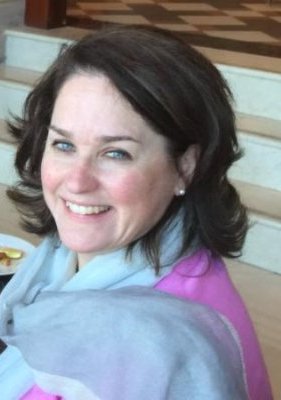
Today we talk about 10.000 THINGS, a book by Jaclyn Maria Fowler published with our Publishing house Europe Books.
Europe Books had the pleasure of interviewing the author, Jaclyn Maria Fowler, to get to know her better, what brought her to the writing of her book 10.000 THINGS, as well as how she chose the title of her book.
Below you can find our interview. Take a seat and enjoy your reading!!!
- What brought you to the writing of your book?
When I accepted a job in the Middle East, I was the first to move to the country. By myself. My children (and little shitzu) came a few weeks later. So, I was disoriented and alone. Homesick. Second guessing my decision. I didn’t know the language. I didn’t understand the culture. I had no friends, no relatives, no one to talk to, yet I had to find an apartment, sign contracts for electricity, gas, and a mobile phone, buy household furnishings, establish a bank account, learn how to properly pronounce my coworker’s names, and purchase a car. And I had to do all these things just as I began the daunting task of learning a new job in a new country with people who spoke a language I did not speak. There were so many times I considered giving up and going home, but my children were so excited about having the chance to learn and live in another country, so I persisted. If I could do it all, we—my children and I—would learn to see the world in a whole new way. In an attempt to get myself situated, I decided on a goal: to do one thing well each day. That one thing might not amount to much: learn to say hello in Arabic, meet a friend, or try a new type of food. But that one thing filled the gap between fear and calm. As I checked off my daily list, my confidence began to grow, and I catalogued it all in writing—my fears, my wins and losses, the new things I was learning, the old things I missed. Writing each day helped me see what I had achieved. It became the very thing that helped me survive. So, I took my computer everywhere—to coffee shops, to work, to the Dubai Mall, to the shoreline—and I wrote about new friends and new understandings. Eventually, I began to see a bigger story emerge in the small bits of writing I was doing to catalogue my new life, and I thought that it may have relevance for someone who also needed to learn to do one thing well each day. That’s why I wrote 10,000 Things.
- What are the messages you want to convey to your readers?
10,000 Things is about recognizing that difference does not automatically mean wrong or bad or dangerous. Difference is often just . . . well . . . different. Being humble enough to observe rather than resorting to fear is frequently the means for opening up a myriad of fresh personal and professional prospects, for expanding the world in new and wonderful ways, for learning that other ways of thinking and doing have merit, and for ultimately becoming a whole new, more well-rounded, better person. Especially now with a war in the Middle East and political leaders thinking that overt racism towards the “other” is an effective campaign tool, 10,000 Things is a chance to shed light on what we gain by seeking out the common characteristics that bind people, languages, cultures, countries to one another. Seeing the differences are inevitable, but it is in celebrating what is shared that we ensure a joyous, constructive outcome of meeting and interacting with each other. 10,000 Things helps people see the beauty, not just in the scenery of the Middle East but also in the language, the culture, and most especially, the people. In addition, 10,000 Things tells a triumphant story that began when I had nothing left and nowhere to go. In an act of defiance, I survived. Through his petty vengeance, a mean-spirited, misogynist of a boss felt it was his right to take my profession from me. While he hurt me—really hurt me, he did not crush me. From his single act of malice, the world opened up to my children and me. Because the United Arab Emirates is a place that is so different from the culture in which I had grown up, I had to work hard to find my place in it. Thus, as a result of my boss’s actions, I became stronger; more importantly, I became a better person. Together with my children, I became a student of the world for a little while. Yet, my success was due to the many magnificent people of the Middle East who stepped in to welcome me and to shepherd me along the way. I hope my story conveys my gratitude and love for them and the places in which they live and love.
- How did you choose the title of your new book?
It’s funny; I write about this very thing in the book. On my daily commute to Dubai, I had gotten into the habit of asking myself over and over again how I ended up in the Middle East. I mean, I knew I had been the one to make the choice. Still, I was living in a world so different from the one I had always known that it made the question seem somehow relevant. And so I continued to ask it. One morning, as I drove the long, lonely desert highway to work, I noticed the beginning of an early fall sunrise; it was hard to miss. In the Middle East, the sunrise happens very quickly because it sits so close to the equator. So, I had no time that morning for a question that blocked my awareness from the beauty taking place all around me. What began as a fiery red ball on the desert floor moved to full height in the sky in a few minutes. And while I admired its beauty, I understood, too, that the sun manifests an unmitigated brutality in the desert sands of the Middle East. Its heat could kill. And, as I contemplated the double-edged sword of the sunrise, NPR was playing quietly on the car radio. In bits and starts, I noticed the story of Austin Beggins, a young man with a bright future who, as a result of a freak accident, ended up paralyzed. As he tried to find meaning for the changes in his life, the NPR reporter introduced his therapist. In his blunt way, the therapist told Austin: “you were going to do 10,000 things before; now you’re going to do a different 10,000 things.” And, in the moment when the question I had asked over and over again had finally left my mind for the sunrise, it struck me. I had moved to the Middle East to find my new 10,000 things, including witnessing the beauty and brutality of a desert sunrise. It seemed fitting, therefore, to name the book after my ah-hah moment.
- How did it feel to see your book published?
I have been very lucky to see several books published, yet each time a new book is published, it is a thrilling—totally thrilling—experience. There is something about sending words out into the world that makes all the early mornings and late nights of writing worth it. Like giving birth, publishing a book is putting a piece of me out for others to interact with without me being present to defend it. Still, as a writer, I am compelled to write, and because of that, I am also compelled to publish what I write. I have learned to trust the process, so I breathe deep, release control of the manuscript, and believe in the truth of my words. I often remind myself that my words will, in all likelihood, outlast me. Publishing them is a little like gaining a bit of immortality. As the bard wrote: “So long as men can breathe, or eyes can see, / So long lives this, and this gives life to thee.” Or, in this case, me. So, while I’m nervous about the secrets I’ve shared, I’m also proud at how I navigated a new world to become the me of today.
- Are you working on a new writing project you can tell us about?
I am currently working on a novel that is a hybrid of a historical fiction, pure fiction, and maybe a little fantasy. The combination is something new for me, and while I didn’t set out to write a hybrid, the story has evolved into one. So, I’m running with it. It began as a historical novel about the ancient gods and goddesses of Ireland—the Tuatha Dé. Nowadays, they are more commonly known as the faeries although they are nothing like the Disneyfied fairy, Tinker Bell. Yet, although they’re different from the popular versions of faeries, much of what is known about the ancient pantheon has been lost to the annals of time. While the historical record is incomplete, early monks and poets catalogued the old stories in their own manuscripts and poems. Like they did in the early part of the last millennia, telling their stories effectively requires a little imagination to put the shards together in interesting, new ways. Despite not having a fulsome historical record, the ancient Irish pantheon is not lost to Ireland. In fact, the gods and goddesses exist in Ireland, not in myth, but in a kind of hushed reality. The Irish countryside, for example, is dotted with passage tombs and portal tombs, ringforts, megalithic burial grounds, and standing stones. The Irish believe the faeries—the old gods and goddesses of Ireland—remain, living under these ancient structures. Even when they say they don’t believe. Some have told accounts of hearing strange underground music; none would venture out into the faery mist as the gods and goddesses return to the world of humans to reassess their earthly kingdom. It is this story that fascinates me and about which I’m writing. The working title is Wide is the Door.
Europe Books thanks the author, Jaclyn Maria Fowler, once again for taking the time and answering our questions. We are really pleased to have walked alongside her on the editorial path that led to the publication of her book 10.000 THINGS. We wish her the best of luck for her future works.
To you, my readers, may this book be a source of knowledge for you, as well as a starting point for reflection on values such as courage, humility, the pursuit of new perspectives, and the desire to become a better, more well-rounded person.
So, my dear readers, all I have to say is to enjoy your reading!
Your Editor!